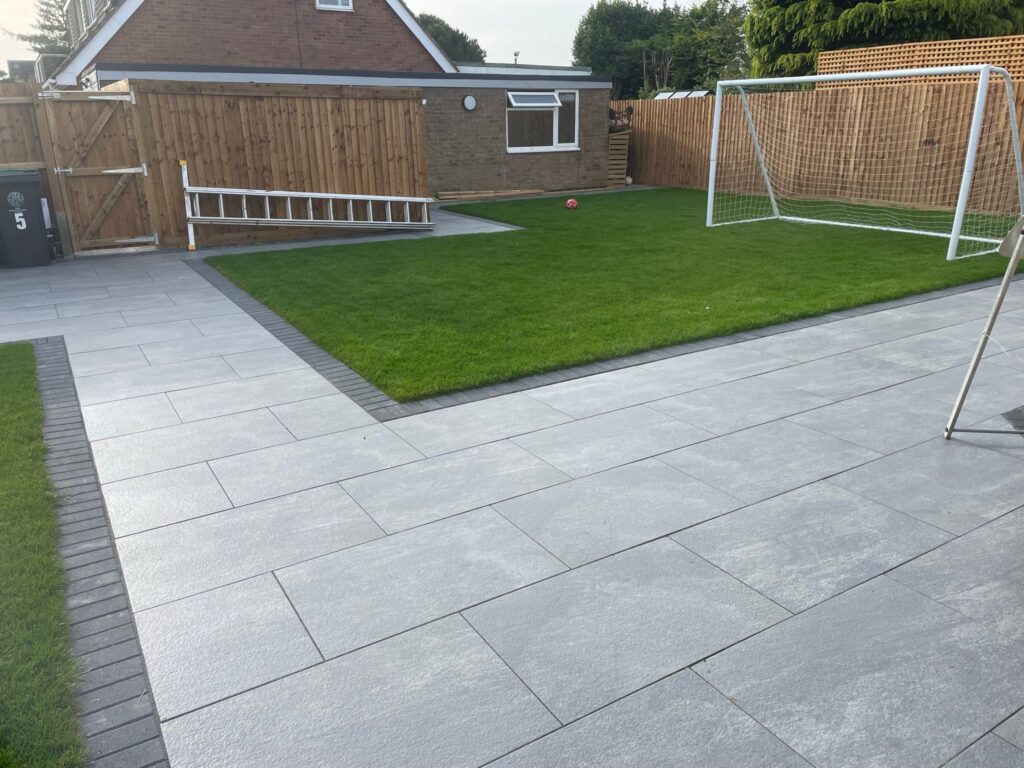
Can Block Paving Be Laid Around Curves and Garden Features?
Yes, block paving can be laid around curves and a wide variety of existing garden features. In fact, its flexibility is one of the reasons it works so well for driveways, patios and paths where a simple rectangular layout would not make the best use of the available space.
For homeowners in Daventry, Northamptonshire, professionally installed block paving can be designed to follow curved boundaries, wrap around planted areas and integrate with established features. The key is careful planning. Curved paving requires accurate preparation, thoughtful block positioning and precise cutting if the finished surface is to look intentional rather than simply fitted around obstacles.
Why Block Paving Works Well with Curved Designs
Block paving consists of individual paving units rather than one continuous surface. This gives installers considerable freedom when designing the shape and layout of a driveway or patio.
Individual blocks can be positioned and cut to follow changes in direction, allowing the paving to work with the shape of the property.
Curved designs can be useful for:
- Driveway entrances
- Winding garden paths
- Rounded patio areas
- Planted borders
- Trees and established planting
- Lawn edges
- Decorative garden features
- Changes between different outdoor areas
This flexibility means the layout can respond to the garden instead of requiring the garden to be redesigned around a rigid paved surface.
Curves Can Make a Driveway Feel More Natural
Not every driveway needs straight edges.
Where the available space allows, gentle curves can soften the appearance of a large paved area and help it connect more naturally with lawns, planting and other landscaping.
Curves can also be used to guide the eye towards the property or create a more considered transition between the entrance and parking area.
However, successful curved paving requires proportion. Too many changes in direction can make a driveway look unnecessarily complicated, whereas carefully positioned curves can give the entire frontage a more cohesive appearance.
Block Paving Can Follow Garden Borders
Existing planting does not necessarily need to disappear simply because a new patio or path is being installed.
Block paving can be shaped around established borders, helping retain the structure and character of the garden.
For example, paving might follow the edge of:
- Flower beds
- Shrub borders
- Lawn areas
- Raised planting
- Decorative gravel sections
Creating a defined paved edge can also make the transition between hard landscaping and softer planting appear considerably neater.
Can Block Paving Be Installed Around Trees?
Block paving can sometimes be designed around established trees, but this requires particularly careful planning.
Trees are living features whose trunks and root systems can change over time. Simply laying paving tightly around a trunk without considering future growth would be poor practice.
The surrounding design should take account of the individual tree and the conditions around it. In some situations, leaving an appropriately planned unpaved area around the tree can allow it to remain a natural focal point while the paving forms a clean border around it.
The important point is that the paving layout should respond to the existing garden rather than treating every feature as an obstacle.
Curved Patios Can Create Distinctive Outdoor Spaces
Block paving is equally suitable for patios where a homeowner wants something less formal than a conventional square or rectangular layout.
A curved patio can work particularly well when connecting the house with surrounding landscaping.
It can also help create defined spaces for:
- Outdoor seating
- Dining areas
- Garden furniture
- Decorative planting
- Routes through the garden
The shape of the patio should still be practical. Furniture needs sufficient usable space, and movement around the area should feel natural.
Good design therefore combines visual interest with everyday usability.
Paths Do Not Have to Be Straight
Curved block paved paths can be an effective way of connecting different areas of a garden.
A gentle change in direction can create a more natural route while allowing the path to move around existing features rather than cutting directly through them.
Block paving is particularly useful for this because individual units can be carefully arranged and cut to maintain the required path width as the direction changes.
Accurate Cutting Makes a Major Difference
Curved paving inevitably requires some blocks to be cut.
The quality of these cuts has a significant effect on the finished appearance. Poorly shaped pieces can create irregular gaps, untidy edges or sections that look noticeably different from the rest of the paving.
Professional installation involves carefully setting out the curve before cutting blocks accurately to suit it.
The objective is to create an edge that appears deliberate and consistent throughout the design.
Edge Restraints Are Particularly Important
The edges of a block paved surface help keep the individual paving units securely contained.
This becomes particularly important around curves because the edge must maintain the intended shape while supporting the surrounding paving.
Correctly installed edge restraints help:
- Define curves clearly
- Support perimeter blocks
- Maintain paving alignment
- Separate paving from adjoining landscaping
- Create a neat finished boundary
Without adequate support, perimeter blocks can become more vulnerable to movement.
The Paving Pattern Needs to Suit the Shape
Not every block paving pattern responds to curves in exactly the same way.
The shape of the area, size of the blocks and intended visual effect should all be considered when deciding how the paving will be arranged.
A skilled installer can plan the pattern so that it remains balanced even where the driveway, path or patio changes direction.
Careful setting out also helps avoid awkward areas containing excessive numbers of small cut pieces.
Ground Preparation Still Comes First
The decorative layout may receive most of the attention, but curved block paving relies on exactly the same fundamental construction principles as any other professionally installed paved surface.
The ground beneath it must be appropriately prepared.
This includes considering:
- Existing ground conditions
- Excavation requirements
- Sub-base preparation
- Compaction
- Levels
- Drainage
- Edge support
A beautifully designed curve will not perform properly if the construction beneath it is unstable.
Drainage Must Be Planned Around the Complete Layout
Introducing curves and garden features does not remove the need for effective water management.
The finished paving needs suitable levels so that rainfall behaves appropriately across the surface rather than repeatedly collecting in unwanted areas.
This requires planning before the blocks are laid.
The position of surrounding lawns, planting areas and other features should be considered as part of the overall design so that appearance and practical performance work together.
Curves Can Help Different Areas Flow Together
One of the strongest reasons for introducing curved block paving is the way it can visually connect different parts of an outdoor space.
A driveway might transition towards a path, while a path may lead naturally into a patio. Using complementary paving and carefully designed edges can help these separate areas feel like parts of one coordinated landscape.
This can be particularly effective when upgrading several areas around a property rather than treating the driveway, paths and patio as completely separate projects.
Existing Features Can Become Part of the Design
A good paving design does not always need to remove existing features.
Instead, established elements can sometimes be incorporated deliberately into the finished layout.
A planted area can become a focal point within a patio. A curved border can help soften a driveway. An established garden feature can be framed by paving rather than removed.
This approach can create a more individual result because the finished surface is designed specifically around the property.
When Are Straight Lines More Appropriate?
Curves are not automatically the best choice for every driveway or patio.
Straight lines can provide a clean, structured appearance and may work particularly well where the property or garden already has strong geometric features.
The best design depends on:
- Available space
- Existing landscaping
- Intended use
- Property proportions
- Position of garden features
- Desired overall appearance
Professional design should respond to the site rather than introducing curves simply for decoration.
Why Professional Block Paving Installation Matters
Creating attractive curved paving involves considerably more than laying blocks in a different direction.
Careful workmanship is required throughout the project, from establishing the shape and preparing the ground to cutting individual blocks and constructing stable edges.
Professional installation helps ensure that:
- The layout suits the available space.
- Curves are smooth and well proportioned.
- The base is correctly prepared.
- Blocks are accurately cut.
- Edges provide appropriate support.
- Levels and drainage are properly considered.
- The finished paving integrates naturally with surrounding features.
These details are what turn an interesting design idea into a practical, well-finished outdoor surface.
Block Paving Driveways and Patios in Daventry
At Daventry Driveways & Patios, we provide professional block paving services throughout Daventry, Northamptonshire. Every property has different dimensions, existing features and practical requirements, which is why the layout of a new driveway or patio should be considered individually.
Whether you want a curved driveway entrance, a patio shaped around existing landscaping or a block paved path that follows the natural layout of your garden, careful planning can help create a surface that feels integrated with the property.
Our focus is on combining thoughtful design with thorough ground preparation and high-quality installation so that the finished paving provides both an attractive appearance and dependable everyday performance.
Conclusion
Block paving can be laid around curves and garden features, making it one of the most adaptable options for driveways, patios and paths. Individual paving units can be carefully positioned and cut to follow curved boundaries, planted areas, lawns and other established features.
The quality of the result depends on much more than the shape of the paving. Accurate setting out, stable ground preparation, effective edge restraints, appropriate drainage and precise cutting are all essential to creating a professional finish.
For homeowners in Daventry, Northamptonshire, Daventry Driveways & Patios can help design and install block paving that works naturally with the layout of your outdoor space. If you are considering a new driveway, patio or path and want to incorporate curves or existing garden features, contact our team to discuss a practical design tailored to your property.
Call us on: 01327 221 298
Click here to find out more about Daventry Driveways & Patios
Click here to complete our contact form and see how we can help with your driveway needs.